
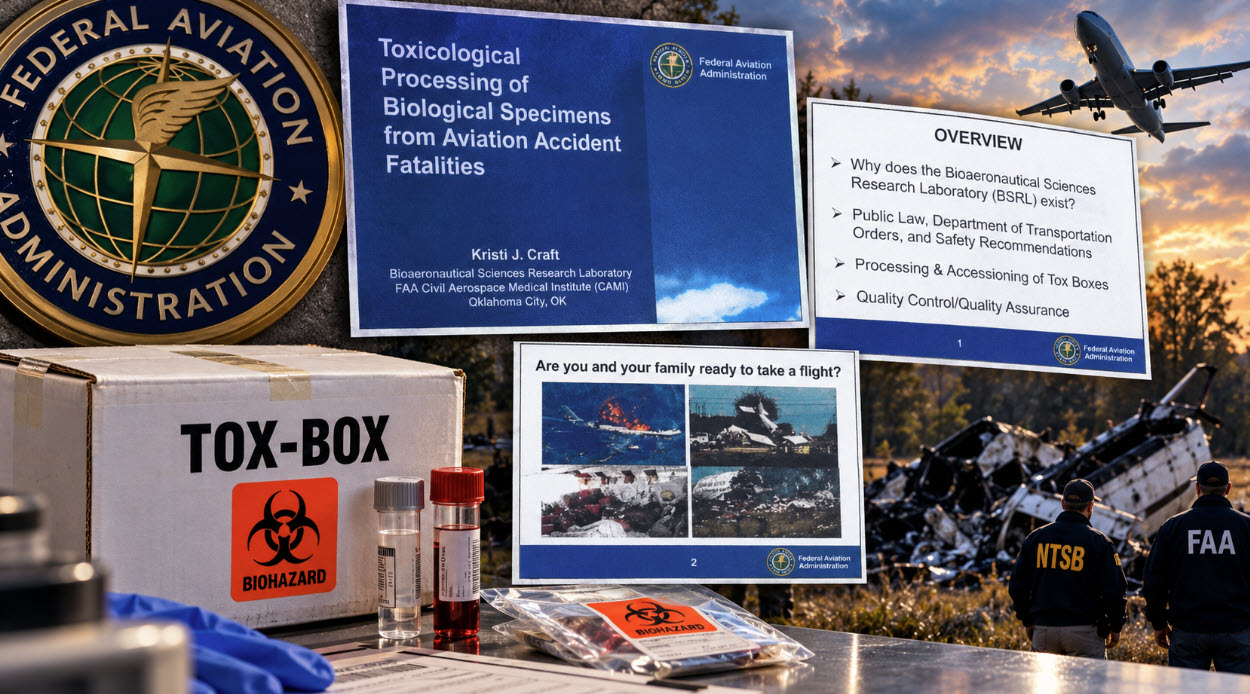

 The Federal Aviation Administration (FAA) released 20 pages of training materials concerning the collection, processing, and analysis of biological evidence following fatal aviation accidents. The records were released on October 12, 2023, in response to Freedom of Information Act request, which sought presentation slides and a syllabus for the training course Mass Fatalities for Medicolegal Professionals (TDA403). In its response, the FAA stated: “Presentation slides were discovered during the search for records pertaining to this request. No syllabus was found, all training in this course was derived from these slides as presented.”
The released materials include presentations concerning the FAA’s Bioaeronautical Sciences Research Laboratory (BSRL) and its Autopsy Program Team, both associated with the Civil Aerospace Medical Institute (CAMI) in Oklahoma City, Oklahoma. These programs support investigations of fatal aviation accidents by coordinating autopsy documentation and conducting forensic toxicological examinations. According to the FAA, its aviation safety responsibilities include collecting medical and pathological information to help identify factors contributing to aircraft accidents. A 2020 FAA technical report, Comparative Evaluation of Forensic Toxicology Findings, 2012–2016, further documents how CAMI’s forensic laboratories and Autopsy Program Team support both the FAA and the National Transportation Safety Board (NTSB).
The first portion of the release, containing presentation slides dated October 1, 2014, describes the laboratory’s handling of biological specimens collected following fatal aircraft accidents. It covers specialized collection kits known as “TOX-BOXes,” chain-of-custody documentation, specimen identification, laboratory storage, and testing for substances including alcohol, carbon monoxide, and various prescription and controlled drugs. The presentation also describes quality assurance procedures, including blind analytical testing, laboratory accreditation, and independent review. These materials provide a historical record of the laboratory’s documented procedures at the time of the presentation.
The second portion addresses the FAA’s Autopsy Program Team and its coordination with medical examiners, coroners, accident investigators, and the NTSB. It describes how the FAA obtains autopsy reports, identifies deceased pilots, and reviews medical evidence that may be relevant to an accident investigation. One instructional case example concerns a fatal light-sport aircraft accident in which an initial decision not to conduct an autopsy was reconsidered. According to the presentation, the subsequent examination identified severe coronary artery disease, including a complete blockage of the left anterior descending coronary artery, and classified the manner of death as natural. The example illustrates the importance of medical findings in examining circumstances surrounding aviation fatalities.
###
Document Archive
 Mass Fatalities for Medicolegal Professionals Package Release [20 Pages, 2MB]
 Loading...
 Reload document
 Open in new tab


