
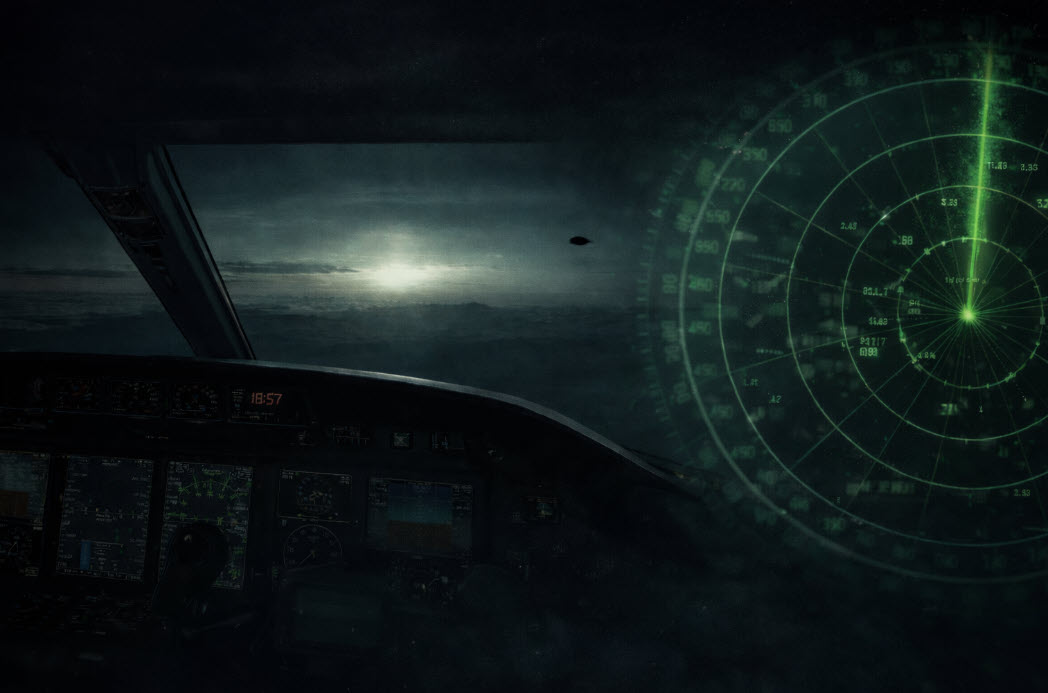

A newly released set of Federal Aviation Administration (FAA) records, obtained through the Freedom of Information Act (FOIA), documents an unusual aerial encounter involving a business jet over Northern Nevada in May 2025. The records include air traffic control (ATC) audio and internal FAA logs, though key data, specifically radar information, was withheld.
The FOIA request, originally submitted May 30, 2025, sought comprehensive records related to an Unidentified Anomalous Phenomenon (UAP) observed by flight PWA192 during its return trip from San Francisco International Airport (SFO) to Chicago Executive Airport (PWK). The FAA issued a partial denial response under case number FAA-2025-03957, releasing limited material while withholding others under federal exemptions.
The case first came to light through an anonymous tip submitted to The Black Vault. While anonymous sources are typically treated with caution, the details provided were corroborated through FAA documentation and audio recordings released under FOIA.
The most direct official acknowledgment appears in the FAA’s Daily Record of Facility Operation (Form 7230-4), which documents the event as it was recorded in real time by Oakland Air Route Traffic Control Center (ZOA).
At approximately 0210 UTC, the log states:
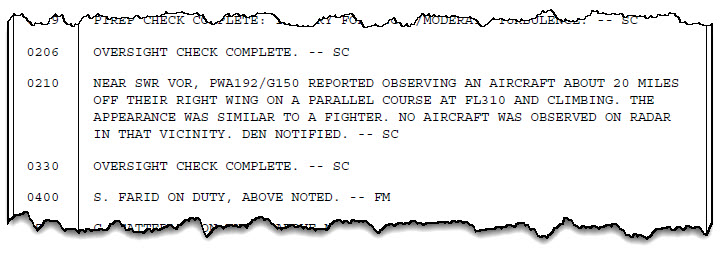
This entry establishes several key facts: the object was visually observed, it appeared aircraft-like, it maintained a parallel course, and it was not detected on radar systems available to controllers.
Audio transcripts from Oakland Center sectors provide a more detailed and dynamic description of the object as observed by the flight crew and discussed with controllers.
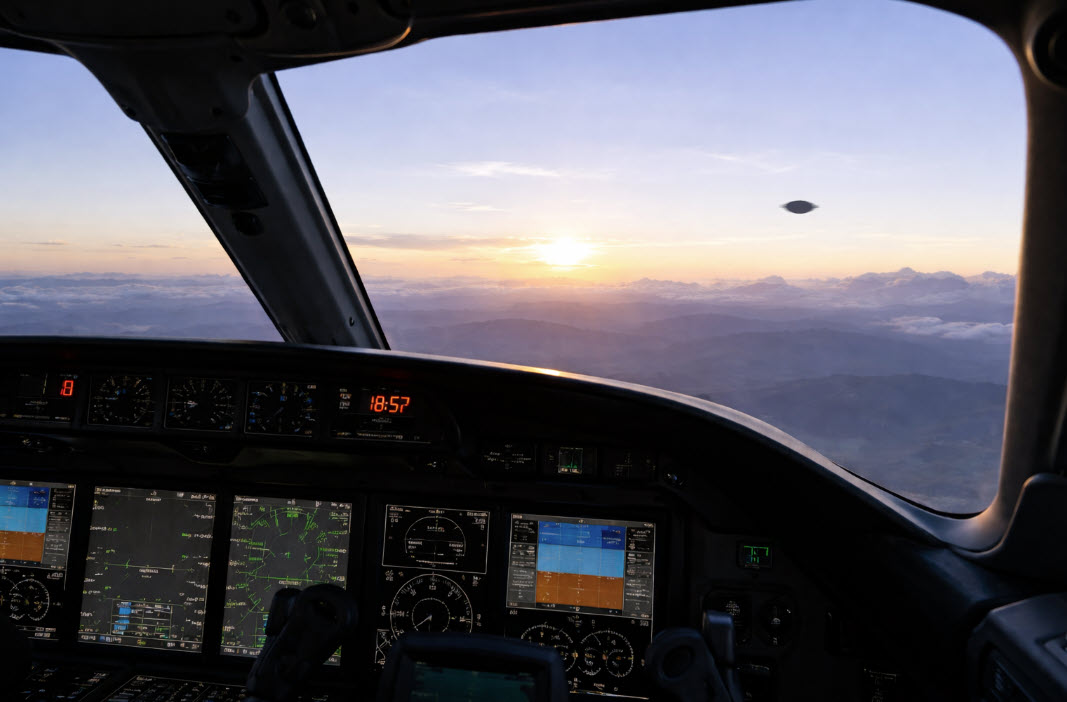
Initial descriptions suggested a “black circle” or object with possible wing-like features. As the encounter progressed, the characterization shifted. At one point, the object was described as resembling “some sort of fighter,” aligning with the wording later used in the FAA’s official log.
The object reportedly maintained position alongside the aircraft for an extended period of approximately 100 miles while pacing the jet at cruise altitude. This sustained proximity is notable, as it implies controlled flight behavior rather than a transient or incidental sighting.
The encounter concluded with the object rapidly ascending and disappearing from view. This abrupt vertical departure was emphasized in the communications, distinguishing the object’s behavior from conventional aircraft operating profiles.
While the FAA log provides a concise summary, the ATC audio reveals a broader range of uncertainty and evolving interpretation among those involved.
The official entry frames the object as “similar to a fighter,” whereas real-time communications included more ambiguous descriptors, including references to unusual shape and unclear configuration. The progression from an undefined “black” object to something potentially resembling a military aircraft highlights how interpretation shifted during the event.

Flight PWA192 is operated by Priester Aviation and utilizes a Gulfstream G150, a twin-engine business jet designed for mid-range operations.
The G150 typically cruises at altitudes up to 45,000 feet and speeds approaching Mach 0.85. Equipped with modern avionics and collision avoidance systems, it is representative of advanced civilian aviation platforms, making its inability to identify the nearby object—visually or electronically—noteworthy.
The FAA withheld radar data under FOIA Exemption 3, citing Sensitive Security Information (SSI).
According to the response letter, “We are withholding in full 12 En Route Automation Modernization radar files because the SSI cannot be segregated.”
The FAA further noted that certain material was withheld under 10 U.S.C. § 130e, which allows for the protection of “sensitive, but unclassified information” where disclosure could reveal vulnerabilities in Department of Defense infrastructure or operations.

However, the only visible redaction within the released Daily Record of Facility Operation appears minimal and tied to an earlier log entry unrelated to the PWA192 incident, referencing navigational aid outages and coded facility status notes. The section documenting the unidentified aircraft encounter at approximately 0210 UTC remains largely intact and unredacted, suggesting the withheld DoD-related information does not directly pertain to the unidentified object.
The log itself provides additional operational context surrounding the event. Routine oversight checks, system certifications (including ADS-B and CPDLC), and periodic pilot report (PIREP) reviews were conducted throughout the shift, with only minor weather-related entries such as turbulence and thunderstorm tops recorded. Just prior to the encounter, a PIREP check logged no significant anomalies beyond light to moderate turbulence, reinforcing that the airspace environment was otherwise stable at the time of the sighting.
The absence of radar data leaves a significant gap, particularly given the FAA log’s explicit statement that no radar targets were observed in the area.
The encounter occurred northeast of Reno, Nevada, which is an area surrounded by multiple military testing and training facilities.
Nearby installations include:
-
Naval Air Weapons Station China Lake (California)
-
Naval Air Station Fallon (Nevada)
-
Tonopah Test Range (Nevada)
-
Nellis Air Force Base and the Nevada Test and Training Range
These locations are associated with advanced aviation testing, including classified and stealth aircraft programs. Given this proximity, it remains plausible that the observed object could have been, and maybe is even most likely, a military asset operating under restricted or non-cooperative conditions.
The FAA’s records ultimately categorize the object as unidentified. While the log leans toward an aircraft-like explanation, the lack of radar correlation, the extended pacing behavior, and the rapid vertical departure leave key questions unresolved.
The event also highlights broader aviation safety considerations. Objects operating undetected in controlled airspace, regardless of their origin, present potential risks to civilian aircraft. The inability to identify or track such objects in real time underscores ongoing challenges in airspace awareness and coordination.
The released records provide a rare, document-supported glimpse into such an encounter, capturing both the uncertainty and the operational response as it unfolded.
###
Document Archive
 FAA-2025-03957 Release Letter and Incident Report [7 Pages, 1MB]
Audio Archive (Unedited – Right Click, Save As)
 PWA192_R43_052025_0130-0245.wav – 140MB
PWR192_R29-32_052025_0130-0245.wav – 140MB
Follow The Black Vault on Social Media:


